BLOG
POPULAR ARTICLES

/
BLOG
How Polypropylene Fibers Help Control Plastic Shrinkage Cracking in Concrete
10 February, 2026
Plastic shrinkage cracking can show up before the concrete has even reached its first set. The slab surface develops fine, uneven lines because the top starts losing water faster than the body of the concrete can replace it. Keeping that early cracking under control helps the finish stay cleaner, helps the slab hold up better and cuts down on patch work in areas where the surface is meant to be seen.
Pashupati Group positions polypropylene fibers as a simple, in-mix reinforcement for that early window, suited to hot sites, gusty weather and low humidity where the surface loses moisture quickly.
Understanding Plastic Shrinkage Cracking
In its plastic phase, concrete sits as paste and aggregate held in a wet matrix. Bleed water rises while the cement begins to gain structure. As sun, heat, or wind drive evaporation, the top skin tightens and pulls while the layer below stays wetter and steadier. That mismatch creates tensile stress at the top layer and a crack network forms as the surface yields.
Risk rises when site conditions and slab geometry work against moisture retention. Common drivers include high wind speed, warm air with low relative humidity, hot subgrades that draw water from the mix and large exposed pours such as industrial floors, pavements and deck slabs.
Why Fibres Matter During the Plastic Stage
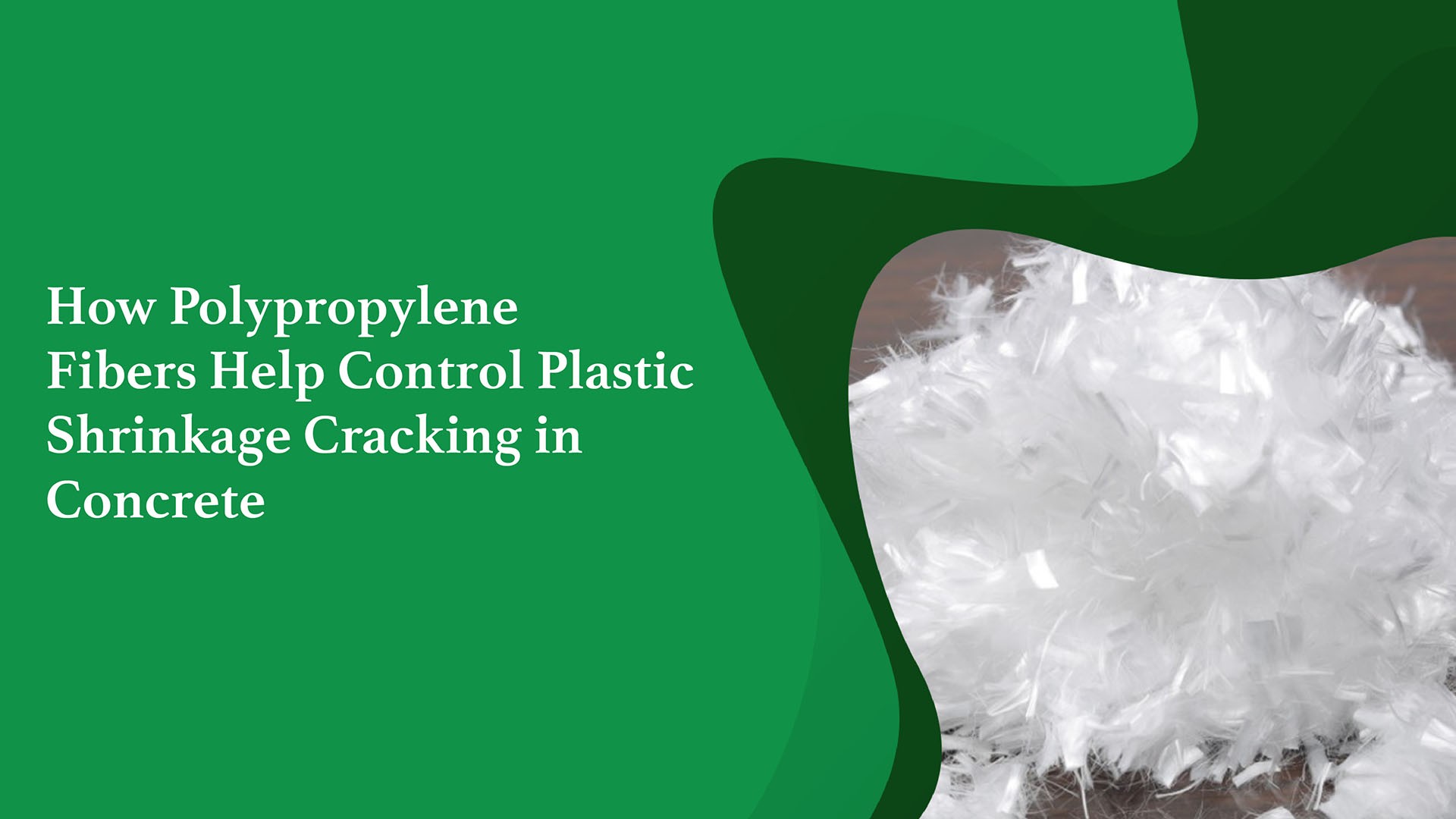
Concrete develops compressive capacity early, while tensile capacity in the first hours stays limited. The first pull comes from the surface skin as it tightens during early drying, when the concrete still has very little ability to resist tension. Polypropylene fibres solve this in a straightforward way by sitting throughout the mix as a distributed network. When tiny separations begin, the fibres span across them and share the stress, keeping openings tight and making it harder for short cracks to join into longer ones.
Polypropylene suits concrete because it stays steady inside the high-alkali cement environment and its low density keeps fibre addition manageable during batching and placement across standard mix designs.
How Polypropylene Fibers Reduce Crack Formation
Crack-bridging comes first. As the paste starts to separate under shrinkage stress, fibres span the gap and transfer load across the opening. This keeps crack width smaller and reduces the chance of a weak line turning into a longer surface crack.
Cohesion support comes next. Fibres help the fresh mix stay more unified during placing and finishing, which reduces local tearing around edges, corners and small restraints. A steadier surface also supports more uniform bleeding and limits sudden dry patches.
Stress distribution completes the picture. A fibre network spreads strain across a broader zone, reducing sharp stress concentration. The behaviour shifts toward finer micro-cracking that stays controlled and often blends into the hardened surface after curing.
Fibre Selection and Dosage, in Clear Terms
Polypropylene fibre reinforcement comes in different lengths and formats. Micro fibres are designed for early-age crack control and plastic shrinkage resistance. Macro fibres are thicker and longer, supporting toughness and residual performance after cracking in suitable applications.
Selection follows the target outcome. Plastic shrinkage crack control typically uses micro fibre dosage aligned with slab exposure, finishing schedule and curing plan. Toughness-focused designs use a macro fibre specification aligned with performance targets and relevant design guidance.
For projects prioritising early crack control, PP Concrett Fibre from Pashupati Group can be specified as an integral fibre addition to support consistent distribution through the mix. For applications centred on toughness after hardening, PP macro fibre can sit as a separate category for internal linking and product selection. Dosage depends on fibre geometry, mix design and exposure conditions, so mix trials and supplier guidance help align fibre content with site realities.
Mixing, Placing and Curing for Reliable Fibre Results
Fibre performance depends on even distribution. Gradual fibre addition and steady mixing time support dispersion so each filament contributes to the network. Teams often review workability after fibre addition and tune admixtures to match the intended finish.
Placement practice and curing amplify the benefit. Fibres control early tensile forces within the fresh matrix, while curing stabilises moisture at the surface. A combined approach typically includes timely finishing matched to bleed behaviour, early curing methods such as curing compounds or wet coverings and simple site measures such as windbreaks or sunshades when evaporation risk is high.
What Changes in Performance and Appearance
When polypropylene fibre reinforcement is aligned with curing and solid placement practice, slabs typically show fewer visible plastic shrinkage cracks and more uniform surfaces. This supports coatings, sealers and polished finishes that benefit from consistent substrate quality.
Tighter crack control also supports durability. Tighter cracks also mean fewer easy routes for water, salts and other site chemicals to move into the slab. That matters in factories, parking decks and outdoor concrete that faces rain, heat and seasonal changes. In the long run, controlled early cracking usually means fewer repairs and a surface that stays more presentable.
Where Polypropylene Fibers Add Value
Polypropylene fibre reinforcement suits many concrete applications where surface exposure is high or finishing quality carries high importance. Typical placements include industrial floors, pavements, driveways, deck slabs, precast panels, thin toppings, repair mortars and screeds. Fibre addition also suits hot climates and windy regions, where evaporation risk climbs soon after placing.
Closing Perspective from Pashupati Group
Plastic shrinkage cracking begins early and strong outcomes come from early action. Polypropylene fibre reinforcement supports the plastic-stage matrix by bridging early microcracks and spreading strain, keeping the surface tighter as the slab moves from fresh placement to set. Matched fibre choice, steady batching and early curing together protect durability and finish quality from the start.
Read More: P-Concrett™ From Pashupati Group, (Reinforcement Fibre for Concrete and Plaster Reinforcement)
FAQ's
RECENT BLOGS
 (Large).jpg)