BLOG
POPULAR ARTICLES

/
BLOG
Understanding Woven PP Material: Properties, Structure and Common Uses
13 April, 2026
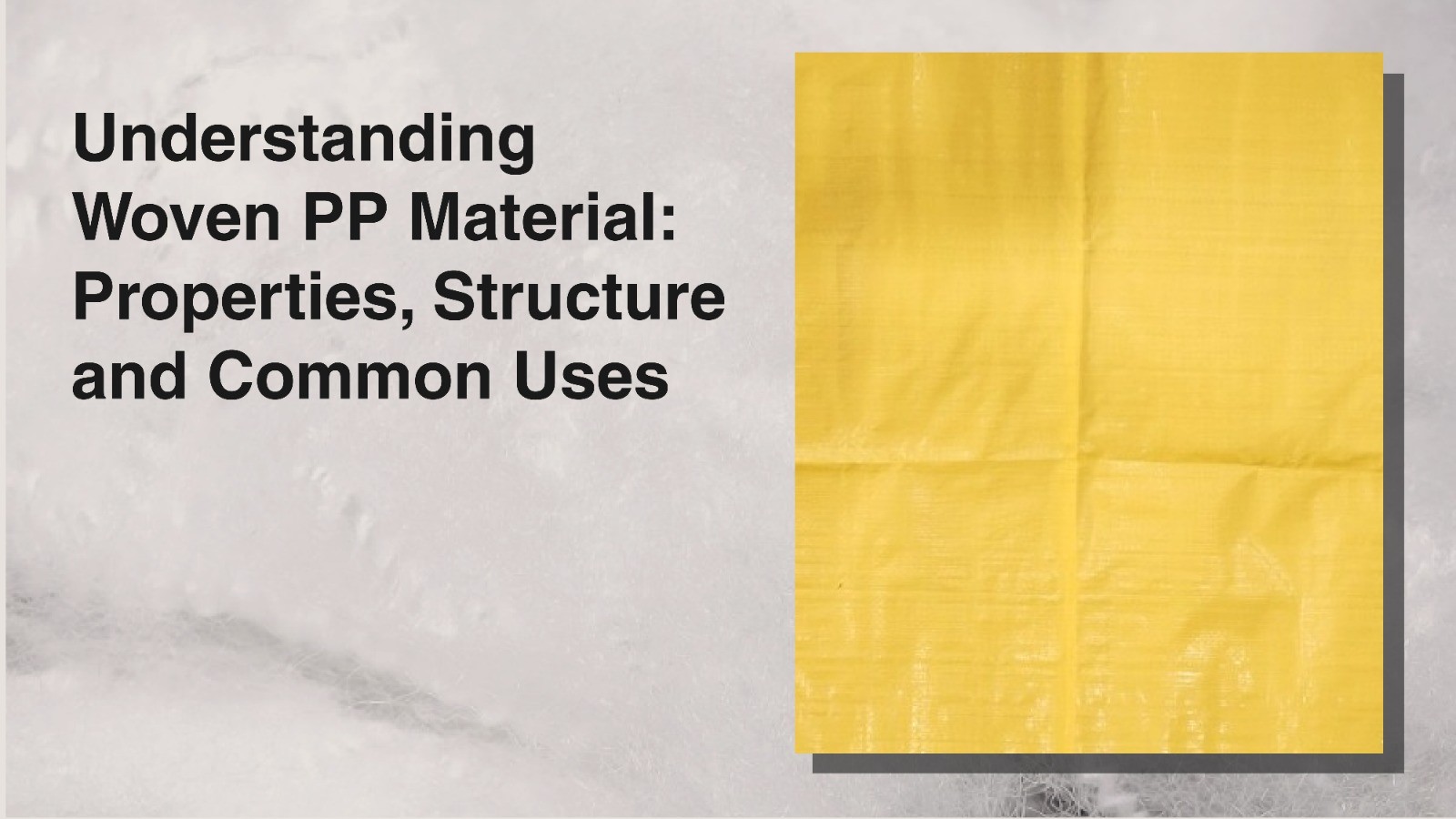
In packaging and bulk handling, some materials earn their place simply by doing the job without friction. PP woven fabric sits in that category. The material starts as polypropylene pellets. They are melted, formed into flat tapes and stretched. The tapes are then woven into fabric. After weaving, the fabric may be laminated or converted into different packaging forms depending on use. Some versions are laminated. Some are stitched into sacks. Others are cut and used for covers or bulk packaging.
Polypropylene is light and holds weight without tearing easily. It also deals with moisture and everyday chemical contact without much change in performance.
What PP Woven Fabric Means
This material uses flat plastic tapes instead of yarn. The tapes are produced from melted polymer, stretched and then woven on looms into a fixed pattern. The surface usually shows a visible cross structure.
That woven layout is what gives the material its behaviour. It spreads load across the fabric rather than concentrating it in one place. That helps during filling, stacking and transport, where the material is under constant stress.
Depending on the requirement, it may be supplied as rolls or converted into finished forms such as sacks, liners, tarpaulins or bulk bags.
How It Is Usually Made
The production route varies by converter, though the broad flow stays similar:
- Resin preparation for the target application
- Tape extrusion through molten polymer processing
- Drawing and orientation to improve tensile properties
- Weaving on looms to create the base fabric
- Finishing through lamination, coating, perforation, printing or stitching
- Conversion into sacks, covers, wrappers or bulk packaging components
Performance depends on how polypropylene woven fabric is built. Weight, tape thickness, weave density and finishing all affect how it behaves in use.
Key Properties That Drive Demand
Demand comes from a combination of practical properties. PP fabric is widely chosen because it pairs useful strength with easy handling and transport.
Buyers usually look at these qualities first:
- High strength relative to weight
- Good moisture resistance, especially in laminated grades
- Chemical resistance for a broad range of contents
- Low density for easier movement and transport
- Good surface suitability for printing
- Reliable dimensional stability in storage and transit
- Flexibility in width, colour and finish
The base polymer also offers thermal and mechanical performance that supports many packaging uses. Polypropylene is lightweight and stays flexible under load. It is consistent with temperature shifts or common chemicals, which makes it workable for storage and transport.
How Woven PP Fabric Performs In Use
Strength And Load Handling
The woven construction spreads stress through the structure, which helps when the fabric is stitched into bags or formed into large packaging units. This is one reason woven sacks and FIBCs are common in bulk material movement.
Moisture Response
The material itself has very low moisture uptake. In packaging applications, that supports product protection during warehousing and transport. Laminated versions are usually chosen when the contents need more protection from outside moisture. Unlaminated fabric is more open by comparison, so it allows some level of air movement depending on how tightly it is woven. That can be useful in certain agricultural uses where complete sealing is not required.
Surface Versatility
Converters can create plain, coloured, coated or printed surfaces. That opens the door to branding, handling instructions and product information directly on the pack.
Process Flexibility
It can be made into sacks for produce, bags for cement or chemicals, or heavier sheets for industrial covers depending on how it is built. The performance envelope shifts with GSM, denier, lamination and stitching style.
Common Types In The Market
The market usually sees a few common variations, each suited to a different job:
Unlaminated Fabric
Often used where breathability and lighter construction matter. It appears in sacks for produce and other dry goods.
Laminated Fabric
Often chosen when moisture control, cleaner appearance and print support are important.
Gusseted Sack Fabric
Useful where pack shape and stackability matter during transport and warehousing.
Fabric For FIBC Conversion
Designed for higher load-bearing applications such as jumbo bags used in industrial material movement.
Application Areas Across Industries
The appeal of woven polypropylene fabric comes from how easily it scales across use cases. Changes in construction allow the material to be used for both basic sacks and heavy-duty packaging.
It is commonly used for moving and storing bulk goods such as grains, fertilisers, cement and chemicals where strength and handling matter.
Typical application areas include:
- Agriculture: seeds, grains, animal feed, produce handling and fertiliser packaging
- Construction: cement, sand, dry mix materials and mineral products
- Chemicals: powders, granules and industrial inputs
- Food supply: sugar, flour, rice, pulses and similar dry goods
- Logistics: bale wrapping, pallet covers and transit protection
- Bulk packaging: FIBC and other large-capacity handling formats
In practice, suitability depends on the grade selected. A food application may call for a different construction and compliance pathway than a building material application. Specification also depends on exposure conditions, food-use requirements, seam strength and the level of barrier needed.
Why Buyers Look Beyond Surface-Level Specs
Cost is one factor. Actual performance depends on how the material behaves during filling, stacking, transport and storage. A fabric that fills cleanly, stacks well, carries weight evenly and supports clear print can create smoother operations across the chain.
A practical evaluation list usually includes:
Fabric Weight
Heavier grades usually support tougher end uses, while lighter grades may suit fast-moving lightweight contents.
Tape Quality
Well-made tapes contribute to tensile strength and consistency.
Weave Density
A tighter weave can influence strength, feel and containment.
Lamination Choice
This affects barrier properties, print finish and product presentation.
End-Use Fit
The right specification depends on the packed product, travel conditions and storage environment.
Sustainability In A Practical Context
Most discussions around materials now focus on how they perform beyond first use. That includes how long they last, whether they can go through multiple handling cycles and what happens after they are discarded.
With this material, the answer depends on how it has been made and used. A simple woven structure behaves differently from one that has multiple layers or heavy printing. End-of-use depends on construction and handling. Lamination, contamination and local recycling systems all influence what can be done with the material after use.
Companies such as Pashupati Group operate across recycling, packaging, fibre, textiles and waste management as part of this wider system.
How To Choose The Right Grade
Start with the requirement. Define what it will carry, how it will be handled and the conditions it will face. What will it carry. How will it be filled. How far will it travel. What kind of storage conditions will it face.
Once those factors are clear, the specification becomes easier to define. Fabric weight, tape quality, weave density and surface finish can then be aligned with the demands of the application rather than chosen in isolation.
A simple selection guide looks like this:
- For dry agricultural produce, focus on strength, breathability and stack performance
- For moisture-sensitive goods, evaluate laminated structures
- For heavy industrial filling, review tensile strength, seam quality and puncture behaviour
- For branded retail or distributor packs, check printability and surface finish
- For export movement, align the fabric with handling conditions, compliance needs and fill weight
Conclusion
This material has earned its place through utility. It is light in hand, strong in service and adaptable across a wide range of uses. From sacks and jumbo bags to industrial covers and transport packaging, its value comes from the way structure and specification work together. Once the requirement is clear, material selection becomes more direct.
Frequently Asked Questions
What Is The Difference Between This Material And Non-Woven Packaging Material?
This fabric is created through weaving flat polypropylene tapes. Non-woven material is formed through bonding fibres or filaments. The two formats differ in structure, strength feel and use case.
Is It Suitable For Agricultural Packaging?
Yes. It is widely used for grains, seeds, feed, produce and fertiliser because it supports efficient filling, carrying and stacking.
Does Lamination Change Performance?
It does. Lamination improves resistance to external moisture, supports better print surfaces and changes how the fabric feels and handles.
What Should A Buyer Check Before Selection?
Key checkpoints include GSM, tape quality, weave density, lamination requirement, seam strength, end-use fit and storage conditions.
FAQ's
RECENT BLOGS
 (Large).jpg)