BLOG
POPULAR ARTICLES

/
BLOG
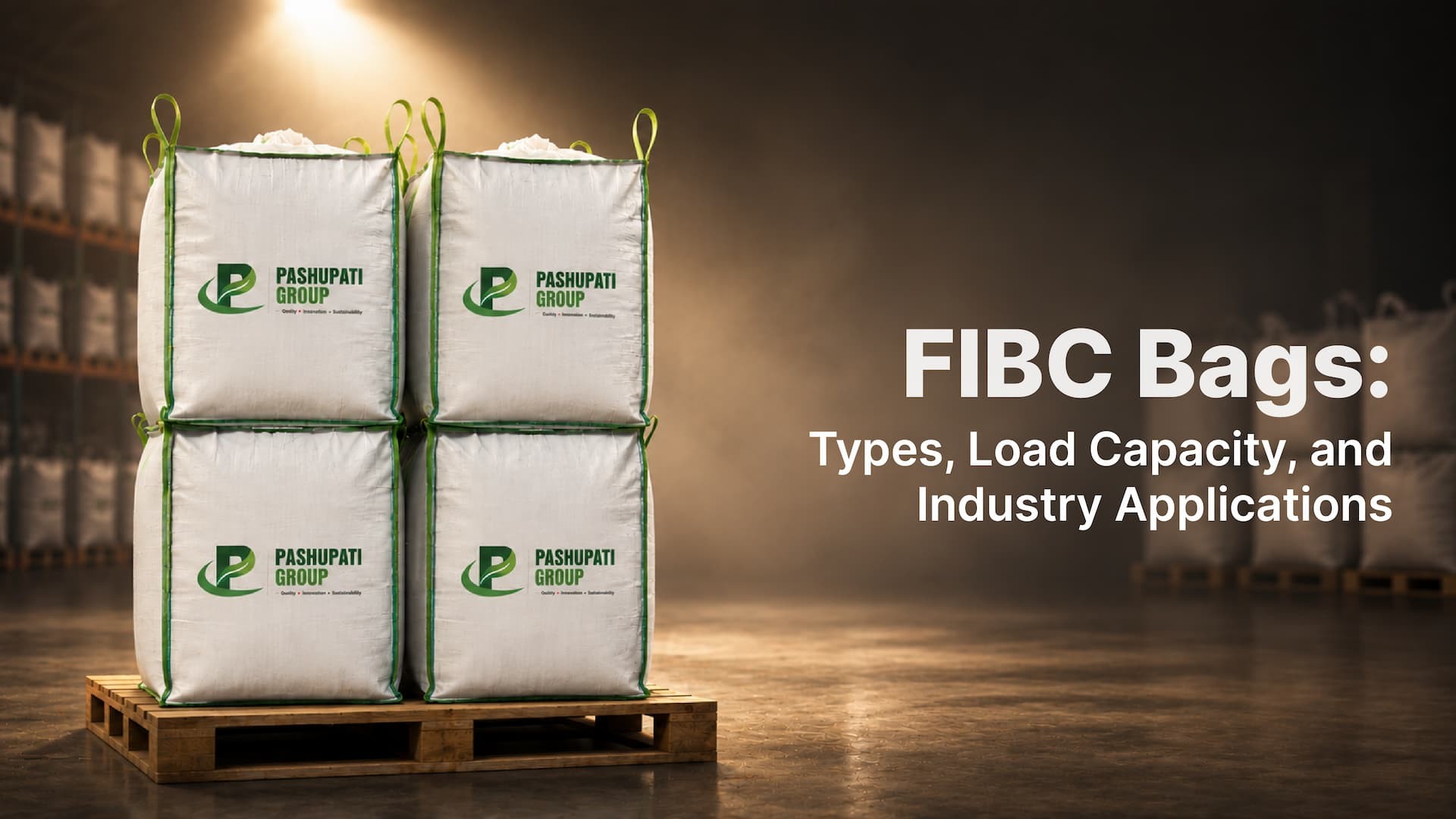
FIBC Bags: Types, Load Capacity, and Industry Applications (India Guide)
08 July, 2026
Every day, thousands of tonnes of fertilizers, polymers, foodstuffs, chemicals, and building material pass through warehouses, manufacturing units, ports, and other parts of the logistics chain in India.Whereas the spotlight normally falls on the cargo being shipped, there is always the question of the packaging involved in such processes.
Without proper packaging for bulk cargo, industries would find it extremely difficult to manage and transport goods effectively and efficiently.
This is where FIBC comes in. Short for Flexible Intermediate Bulk Containers, FIBC bags are now some of the most commonly used packaging materials for bulk cargo around the world.
Flexible yet durable, these containers are designed to hold enormous amounts of dry cargo, and can be quite hard for regular packaging to match up to. From agriculture, to chemical industry, minerals and polymers, FIBC bags can be found in almost all industrial sectors that depend upon bulk cargo management.
This guide will provide an overview of FIBCs, their benefits, various types, load capabilities, and industrial applications.
What Are FIBC Bags?
The Flexible Intermediate Bulk Container or commonly known as FIBC Bag is an industrial-grade packaging container that uses mainly woven polypropylene fabric for its manufacturing purposes.
It has been popular among many industries and is commonly known by names such as:
- Flexible Intermediate Bulk Container Bags
- FIBC Jumbo Bags
- Bulk Bags
- Top Bags
- PP Woven FIBC Bags
Contrary to conventional packaging containers, these types of FIBC bags are able to carry higher amounts of weight yet remain lighter and easier to transport.
Currently, they have found applications in agriculture, food processing, chemical, fertilizer, pharmaceutical, construction, and petrochemical industries.
Why Industries Prefer FIBC Bags
The demand for FIBC bags is not only due to their ability to hold weight. Businesses prefer them as they offer a combination of solutions to different issues within operations.
High Load Capacity
FIBC bags have an ability to hold heavy loads, which means fewer packages are required to transport materials.
Lower Transportation Expenses
Being relatively light and collapsible when not loaded, the bags reduce overall costs of storage and transportation.
Ease of Handling
Modern FIBC bags usually come with lifting loops to be easily handled by forklifts and cranes.
Better Space Utilization
Some bag types like baffle bags ensure proper use of warehouse and containers thanks to its stable shape in transportation and storing.
Flexibility
Different businesses may need differently shaped bags. Today, modern FIBC bags can be custom-made as far as their top, bottom, and loops construction and lining is concerned.
Understanding FIBC Bag Load Capacity
One of the biggest advantages of FIBC bags is their ability to handle substantial loads safely. For a closer look at how these load ratings are tested and certified, see our blog on Safe Working Load and Safety Factors in FIBC Bags.
Depending on the application, FIBC bags are available in capacities ranging from 0.5 to 2 tonnes
Typical load capacities include:
|
Capacity |
Common Applications |
|---|---|
|
0.5 to 2 tonnes |
Food ingredients, chemicals, fertilizers, polymers, minerals, industrial raw materials, and heavy-duty industrial applications |
The variety of packaging solutions offered by Pashupati's woven packaging products includes packaging options that can be used for carrying loads as small as 0.5 to even 2 tonnes, according to business needs.
Types of FIBC Bags
Selecting the right FIBC bag depends on the product being transported and the handling environment.
U Panel FIBC Bags
The U Panel FIBC Bag is one of the most commonly used bulk packaging solutions in the industry. Its construction uses a U-shaped fabric panel with two side panels, providing excellent strength and shape retention.
Key benefits include:
- Better stackability
- Higher load-bearing capacity
- Improved pallet utilization
- Excellent dimensional stability
Baffle FIBC Bags
A Baffle Bag FIBC contains internal fabric panels that help maintain a square shape when filled.
Benefits include:
- Better stacking
- Improved container utilization
- Greater warehouse efficiency
These bags are especially useful for export-oriented industries.
Circular FIBC Bags
Circular FIBC Bags are manufactured using tubular woven fabric, resulting in fewer side seams and a more economical production process. Their design makes them a practical choice for industries requiring large volumes of bulk packaging without compromising on strength and reliability.
These bags are commonly used for packaging and transporting polymers, plastic granules, fertilizers, minerals, ores, and other industrial raw materials.
Single/2 Loops FIBC Bags
Single and Two Loop FIBC Bags are designed for simplified handling and efficient logistics operations. Their integrated lifting loops allow for quick loading, unloading, and transportation, reducing handling time across supply chains.
These bags are particularly preferred for export packaging, high-volume shipments, and automated filling operations.
Top Construction FIBC Bags
Different products require different filling methods.
Top construction options may include:
- Open Top
- Duffle Top
- Filling Spout
These configurations improve filling efficiency and product containment.
Bottom Construction FIBC Bags
Depending on discharge requirements, businesses can choose:
- Flat Bottom
- Discharge Spout
- Conical Bottom Designs
The right bottom construction improves unloading efficiency while minimizing product loss.
Lift Loop FIBC Bags
Lifting loops are a critical part of FIBC design.
Depending on operational requirements, bags may feature:
- Corner Loops
- Cross Corner Loops
- Sleeve Lift Systems
These designs improve handling safety during transportation and storage
Its construction offers excellent strength, making it suitable for fertilizers, polymers, chemicals, and agricultural products. The woven polypropylene fabric used in this construction is covered in more detail in Manufacturing Process of Polypropylene Woven Bags: A Detailed Guide.
|
Category |
The Use |
|
Standard FIBC/Jumbo Bags |
Core bulk packaging solution for industrial applications. |
|
U-Panel FIBC Bags |
Commonly used for fertilizers, polymers, and chemicals. |
|
Circular FIBC Bags |
Suitable for high-volume industrial packaging requirements. |
|
Baffle FIBC Bags |
Space-efficient bags ideal for warehousing and exports. |
|
FIBC Bags with Liners |
Used where moisture protection and contamination control are important. |
|
Food-Grade FIBC Bags |
Relevant for food, grains, sugar packaging. |
|
UN Certified FIBC Bags |
Suitable for hazardous and regulated materials. |
Specialized FIBC Bags for Critical Applications
There is no one-size-fits-all bulk bag for all industries.
Some uses need extra attention regarding sanitation, safety, or compliance.
Food Grade FIBC Bags
For food grade packaging, extra care should be taken during production.
Uses include:
- Sugar
- Flour
- Salt
- Starch
- Food additives
Some FIBC solutions offered by Pashupati for the food industry include vacuum cleaning, pallet shrink-wrapping, metal detectors, air blowing, and quality control.
Pharma Grade FIBC Bags
Pharma Grade FIBC Bags are specifically designed for the transportation of pharmaceuticals and other health care products to facilitate safe and hygienic handling of the materials in bulk. Such bags are perfect for transporting APIs, pharmaceutical powders, granules, and other similar sensitive products.
UN Certified FIBC Bags
UN Certified FIBC Bags are particularly manufactured for the transport and containment of hazardous and dangerous materials.
The word “UN Certified” means that the bags have been examined and certified in terms of UN standards for the transport of dangerous goods. They are subject to thorough testing in respect of their strength, stacking, lifting, and handling capabilities and are best suited for the packaging of chemicals and petrochemicals.
The Role of FIBC Liners
In most instances, just relying on the outer bag will not be sufficient enough.
This brings us to the need for utilizing liners.
Though FIBC bags have the capability to handle bulk materials, the FIBC liners bring an additional element of safety when dealing with products that can be affected by moisture, contamination, oxygen exposure, and even loss of product. Liners that go into the bulk bags enable the safety and integrity of the product.
The use of FIBC liners is especially vital for the food industry, pharmaceuticals, specialty chemicals, polymers, and fine powders.
Common Types of FIBC Liners:
- Baffle Liners
- Form-Fit Flanger Liners
- Form-Fit Liners
- Form-Fit Tabbed Liners
- Open-Top Liners
As part of its bulk packaging portfolio, Pashupati Group offers a range of FIBC liner solutions that help improve product protection, handling efficiency, and packaging performance across industrial applications.
Industry Applications of FIBC Bags
Due to their flexible applications, FIBC bags have become an excellent choice for various industries.
Industry |
Applications / Usage |
Agriculture |
Grains, seeds, livestock feed, and other agricultural goods can be packed in FIBC bags. |
Fertilizers |
Due to their sturdy structure, FIBC bags are suitable for transporting vast amounts of fertilizers. |
Food Processing |
Commonly used to pack sugar, flour, salt, starch, and food products. |
Chemicals |
Special FIBC bags are used to pack powder and granular forms of chemicals. |
Polymers & Petrochemicals |
Used by the polymers industry in packing pellets, flake plastics, and petrochemicals. |
Construction Materials |
Used for packing cement, minerals, ash, and building materials. |
Why Choosing the Right FIBC Bag Manufacturer Matters
Performance of an FIBC is equally dependent on the company producing the bag and not just its design. A dependable company guarantees consistent performance through consistent quality and timely deliveries.
Some considerations to keep in mind while choosing a manufacturer for your FIBC bags include:
Quality - Good material and quality control will guarantee consistent performance.
Customization - Ability to customize bags to suit your needs.
Regulation Compliance - Compliance with regulations of the industry, particularly in cases where there is food, pharmaceuticals, chemicals, or exports involved.
Technical Assistance - Technical advice on choosing the best FIBC for your product.
Supply Chain Services - Assurance of timely deliveries.
The Pashupati Group Advantage in Bulk Packaging
Bulk packaging demands reliable manufacturing capability and tailor-made solutions suited to the demands of various industries. With its line of FIBC bags, liners, and packaging solutions, Pashupati Group assists industries to protect their goods from any harm in addition to optimizing their packaging processes.
- FIBC Bags - For secure storage and transporting of bulk materials.
- FIBC Liners - For better product protection and packaging processes.
- Packaging Solutions - Assisting industries with bulk packaging demands.
Conclusion
In view of the increasing volume of material and the complexity of supply chains in industries, it would be safe to say that FIBC bags are among the most efficient and versatile bulk packaging options.
From basic PP woven FIBC bags and U Panel FIBC Bags to food grade, pharma grade, and UN certified bags, the current FIBC packaging is designed to satisfy very specific industrial needs. For more on how recyclable PP materials factor into modern bulk packaging choices, see Recyclable PP Bags For Cleaner, Stronger Packaging Choices.
It is not just about carrying capacity when it comes to choosing the right kind of FIBC bag for your industry. Safety, ease of handling, regulatory compliance, and supply chain stability are just some of the things to consider.
Pashupati Group has been meeting the needs of industries within the food processing, agriculture, chemicals, polymers, and construction sectors through its wide-ranging woven packaging products.
FAQ's
RECENT BLOGS
 (Large).jpg)